Anna Friedrich · 22 October 2026
Building Resilient Online Communities Through Structured Knowledge Exchange Programs
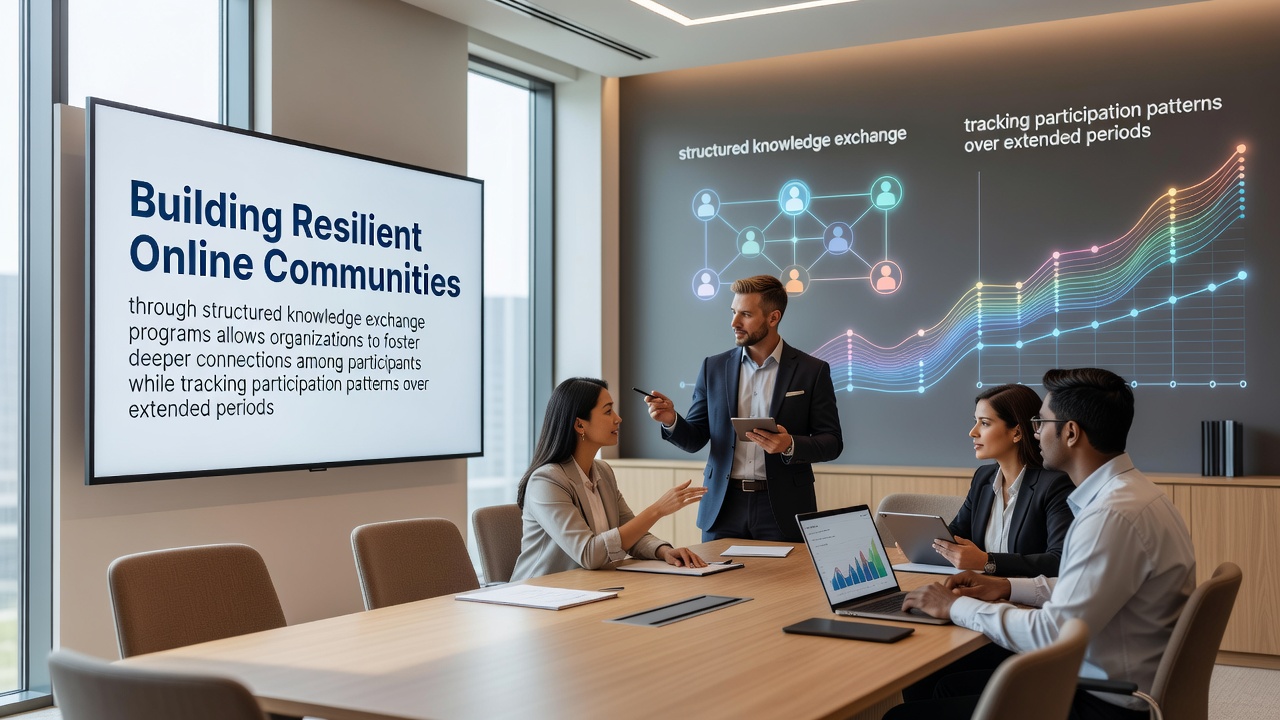
Organizations have implemented structured knowledge exchange programs to strengthen online communities, and these initiatives create pathways for participants to share expertise while maintaining long-term engagement records. Research from academic institutions shows that such programs rely on scheduled sessions, documented contributions, and feedback loops that help sustain activity levels across months or years. Data collected through participation logs reveals patterns in how members interact, which groups form around specific topics, and where retention rates remain highest.
Core Elements of Knowledge Exchange Structures
Structured programs typically incorporate defined roles for facilitators, clear topic agendas, and digital tools that archive discussions for later reference. Participants join through invitation systems or open registration portals, after which organizers assign them to cohorts based on shared interests or professional backgrounds. These arrangements allow organizations to monitor metrics such as session attendance, comment frequency, and cross-referencing of shared resources over extended timelines. Studies conducted by research centers indicate that communities using these methods demonstrate steadier growth compared to unstructured forums, because the format encourages repeated contributions rather than one-off posts.
Tracking systems often integrate with existing platforms, pulling data on login times, response rates, and content downloads. Analysts review these figures monthly to identify drop-off points or emerging leader figures within the group. In October 2026, several European research consortia released updated datasets showing how organizations adjusted their exchange schedules to accommodate seasonal participation shifts, resulting in more consistent activity across different time zones.
Connection Building Through Repeated Interactions
Deeper connections develop when participants return to the same cohorts over multiple cycles, allowing relationships to form around shared projects or problem-solving tasks. Organizations facilitate this by rotating discussion leaders and pairing newcomers with experienced members for mentorship pairings. Evidence from longitudinal observations suggests that these repeated touchpoints increase the likelihood of members initiating independent collaborations outside the main program structure. Participation patterns tracked over two-year periods frequently highlight clusters of high-engagement users who maintain activity even during low-activity seasons.

Extended Tracking and Pattern Analysis
Long-term data collection relies on anonymized identifiers that preserve individual privacy while revealing aggregate trends. Analysts examine variables including average response time to queries, volume of resources uploaded per participant, and frequency of cross-topic references. These measurements help organizations refine future program cycles by highlighting which formats sustain interest longest. Reports from government statistical agencies in Canada and Australia have documented similar approaches in public sector digital engagement projects, where structured exchanges supported ongoing policy discussion groups with measurable retention improvements.
One initiative tracked by university researchers followed a professional network across 18 months and found that members who completed at least four exchange cycles showed higher rates of subsequent resource sharing. The data also indicated that geographic diversity within cohorts correlated with broader topic coverage, since participants from different regions introduced distinct case examples during sessions.
Implementation Examples Across Sectors
Nonprofit organizations have applied these methods to coordinate volunteer training networks, while educational institutions use them to connect alumni with current students for career guidance sessions. Corporate teams have adopted parallel structures for internal knowledge transfer between departments located in separate locations. Each case demonstrates how scheduled exchanges combined with participation dashboards create records that organizations consult when planning expansions or identifying skill gaps. Observers note that the ability to review historical patterns assists in predicting future engagement levels and adjusting outreach accordingly.
According to findings published through the OECD digital economy reports, organizations that maintain consistent tracking protocols report clearer insights into community health indicators. These insights include identifying when external events temporarily reduce activity and when internal adjustments restore momentum.
Conclusion
Structured knowledge exchange programs provide organizations with mechanisms to cultivate resilient online communities through deliberate connection points and systematic participation monitoring. The combination of scheduled interactions and longitudinal data analysis supports ongoing adaptation, helping groups maintain relevance and activity across changing conditions. As more entities adopt these approaches, the accumulated records offer increasingly detailed pictures of how communities evolve and sustain themselves over time.