Anna Friedrich · 5 November 2026
The Evolution of Interactive Tutorial Design Within Community-Driven Technical Repositories
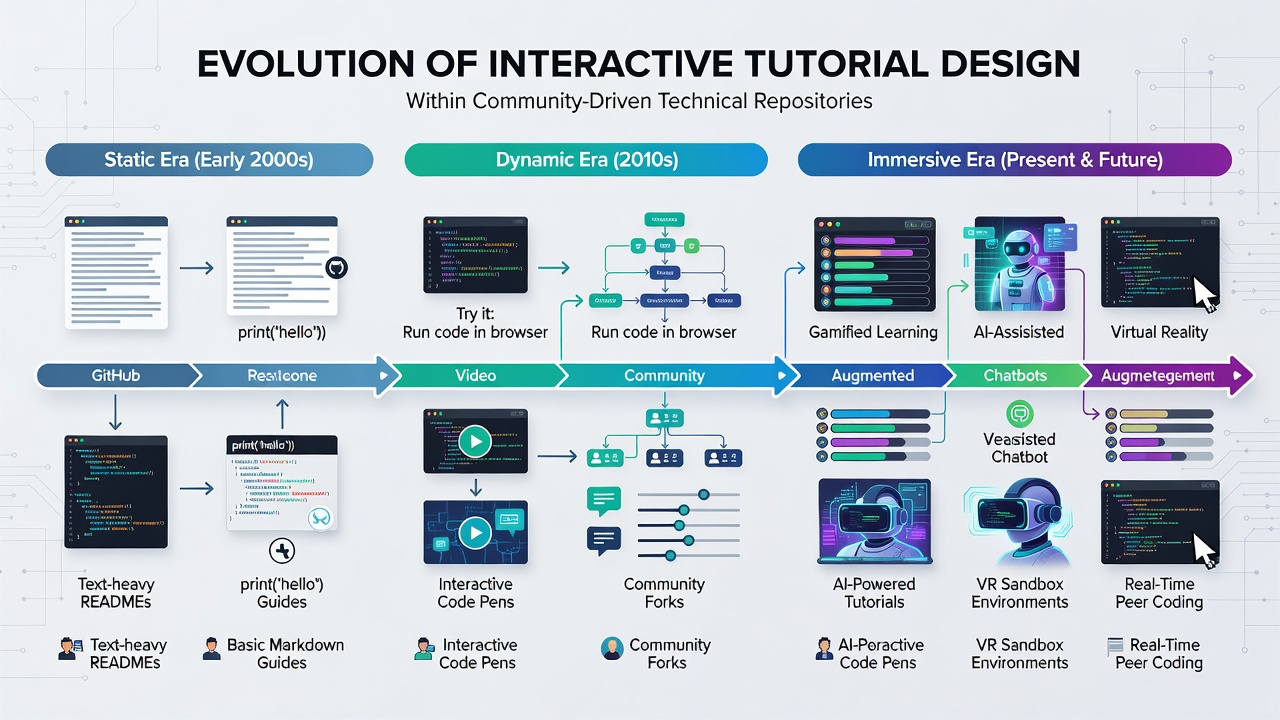
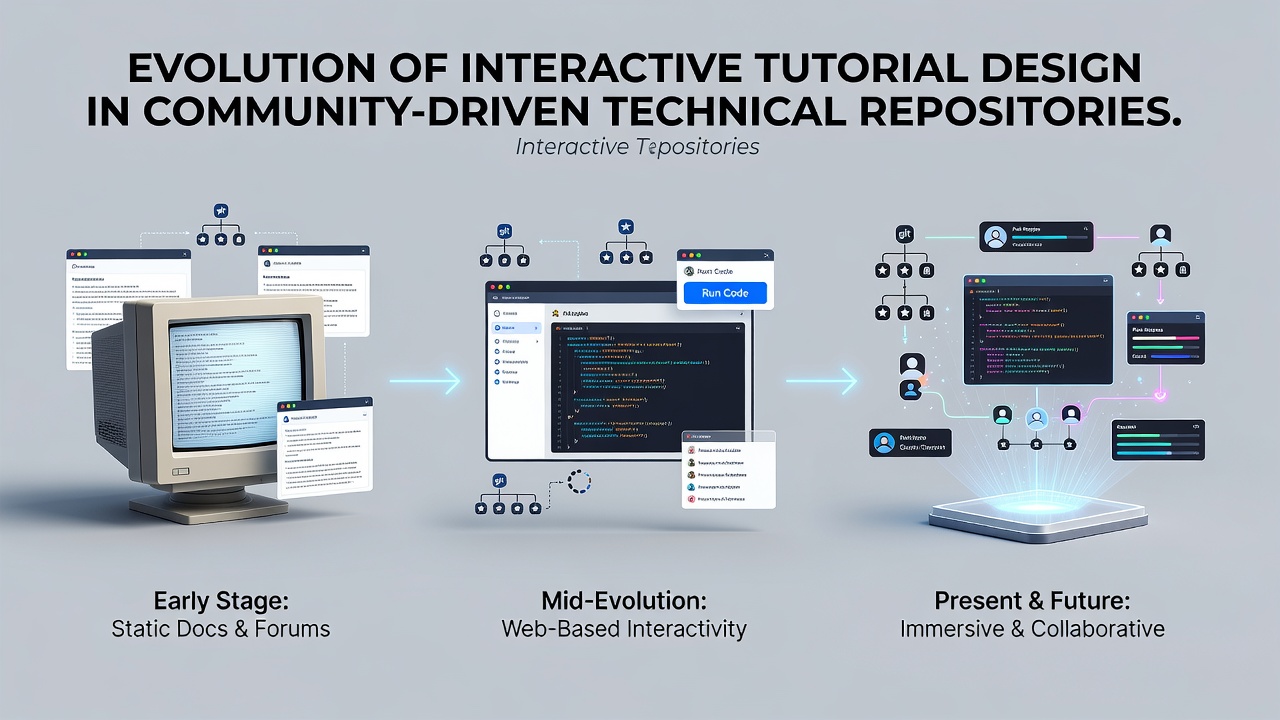
Community-driven technical repositories have shifted from static documentation pages to systems that incorporate runnable code blocks, step-by-step simulations, and user-contributed feedback loops over the past two decades, and these changes reflect broader patterns in open-source collaboration platforms. Early repositories relied on plain text files and basic markdown formatting, yet contributors gradually introduced embedded code editors that allowed readers to test examples directly within the browser interface.
Initial Stages of Tutorial Development
Repositories such as GitHub and GitLab maintained simple README files and wiki sections through the early 2010s, where tutorials consisted of numbered lists and code snippets that users copied manually into their local environments. Data from platform usage reports indicate that participation rates increased once maintainers added syntax highlighting and collapsible sections, and these features reduced friction for new contributors who joined projects in fields like data science and web development.
By the mid-2010s, community members began integrating third-party tools that rendered Jupyter notebooks alongside repository files, which enabled readers to execute Python or R scripts without leaving the documentation view. Researchers at institutions including those affiliated with European academic networks documented how these additions correlated with higher retention among novice users who previously abandoned tutorials at the setup stage.
Expansion of Interactive Elements
Platform updates in 2018 and 2019 introduced native support for live code execution through services like GitHub Codespaces and similar environments on GitLab, while community maintainers adapted these tools to create guided pathways that highlighted specific functions within larger codebases. Observers note that tutorials evolved from linear sequences into branched structures, where users selected paths based on their prior experience levels, and this branching reduced the average time to complete onboarding tasks according to aggregated analytics shared across multiple projects.
Additional layers appeared when contributors embedded quiz components and progress trackers directly into repository pages, and these elements drew from patterns established in educational software yet remained tied to version control histories. One study released by an Australian research consortium in 2022 tracked how interactive checkpoints improved accuracy in user-submitted pull requests that addressed tutorial errors.
Integration with Version Control and Community Input
Repositories incorporated real-time synchronization between tutorial content and the underlying codebase by 2024, which meant that updates to functions automatically flagged corresponding tutorial sections for review. Contributors used issue trackers and discussion threads to propose modifications, and these workflows produced iterative refinements that reflected actual usage patterns reported by downstream developers. Figures from industry analyses show that projects adopting such linked systems experienced measurable increases in documentation maintenance activity compared with those retaining static formats.
Community governance models played a central role in this progression, as maintainers established review processes specifically for interactive components that required testing across multiple operating systems and dependency versions. Those processes often involved automated checks that validated tutorial steps against current repository states, and the resulting stability encouraged wider adoption among specialized technical communities focused on areas like machine learning frameworks and infrastructure tools.
Developments Approaching November 2026
As of November 2026, several major repositories have deployed AI-assisted suggestion engines that propose interactive tutorial updates based on recent commit patterns and user interaction logs, yet these engines operate under community-defined rules that preserve editorial oversight. Data shared through open datasets indicate continued growth in tutorial completion rates across repositories that combine runnable environments with collaborative annotation features. External resources such as reports from the Association for Computing Machinery highlight parallel trends in how structured knowledge exchange influences long-term project sustainability.
Cross-platform compatibility has advanced through standardized formats that allow tutorials to transfer between different repository hosts without loss of interactive functionality, and this standardization emerged from working groups that included representatives from North American and Asian technical organizations. Community members continue to refine accessibility options within these tutorials, incorporating screen reader support and keyboard navigation that align with established web standards.
Conclusion
The progression of interactive tutorial design in community-driven technical repositories demonstrates consistent expansion from basic text formats to integrated, executable systems that respond to contributor input and platform capabilities. Records maintained by repository hosts and independent research groups document these shifts through usage metrics and contribution histories that span multiple years. Continued development in this area centers on maintaining alignment between tutorial interactivity and the collaborative nature of the repositories themselves.